How Clinical Informatics Improves Veteran Health Outcomes

How Clinical Informatics Supports Veteran Care During VA EHR Modernization

The Department of Veterans Affairs (VA) is in the middle of the largest EHR modernization effort in federal healthcare, and the stakes at the point-of-care are high. A Veteran admitted during a cutover, a provider reconciling medications across VHA and community care records, a clinical decision support alert firing on incomplete Problems or Allergies data: each is a moment where the quality of clinical informatics work done months earlier determines whether the next clinical decision is safe.

ReMedi Health Solutions, in partnership with Tribility and Clinical Architecture as Team Tribility, has published a new white paper, How Clinical Informatics Improves Veteran Health Outcomes. The paper offers an operational definition of clinical informatics and walks through how disciplined data preparation, interoperability, provider training, and real-time oversight translate into safer, more coordinated care for the more than nine million Veterans enrolled in VHA.

Why point-of-care data readiness is the central challenge

OIG and GAO reviews have documented persistent gaps in medication identifiers, delays integrating community care records, and downtime events that continue to threaten data continuity during and after activation. The whitepaper describes a clinically governed approach to closing those gaps:

  • Clinically-governed chart preparation. Experienced clinical abstractors, supported by physician and nursing oversight, systematically review and validate high-value data from legacy EHRs so Problems, Allergies, Medications, Procedures, and Immunizations (PAMPI) are accurate on day one and CDS tools perform as designed.
  • Physician-led training and personalization. One-on-one, specialty-specific EHR training and personalization led by physician informaticists, aligning note templates, order sets, and workflow tools to how providers actually practice in VHA settings.
  • Interoperability and downtime readiness. Standards-based HL7 and FHIR interfaces paired with downtime planning that protects continuity through system cutovers, with real-time analytics to highlight emerging risks.
  • Cutover data continuity for admitted patients. Role-based clinical data entry sequenced across registration, nursing, pharmacy, and physician workflows so active medications, orders, allergies, vitals, and pending results move safely into the new record.
  • Analytics-driven oversight. A Real-Time Readiness Command Center that gives leadership visibility into abstraction progress, training participation, readiness scores, alert override patterns, and cutover readiness as it happens.

This is the work that determines whether clinicians trust the record in front of them on day one, and whether EHR modernization delivers its intended value for Veterans and the teams who serve them.

Advancing population health management for Veterans

The white paper also examines how clinical informatics advances population health management across VA. Millions of Veterans live with chronic conditions, including PTSD, traumatic brain injury, diabetes, cardiovascular disease, and toxic exposure-related illness covered under the PACT Act of 2022. Many receive care across both VA medical centers and community providers, and OIG findings show that integrating community care records within required timeframes remains a challenge.

When community care documentation is integrated into the longitudinal record and EHR data is structured for population-level analysis, leadership gains clearer visibility into emerging health trends, care gaps, and resource demands. Care teams can identify Veterans whose conditions are worsening earlier, align screening and outreach with PACT Act presumptive criteria, and intervene before issues become acute. That integrated data foundation is what turns population health from a reporting exercise into coordinated, proactive care.

What else the white paper covers

  • Safeguarding Veteran patient safety with quality data, including value set and mapping consistency across VHA, DHA, and Oracle Health exchange pathways using Clinical Architecture’s Symedical platform and the PIQI framework.
  • Patient access to health data through My HealtheVet, VA.gov, and the VA: Health and Benefits app, and the growing role of patient-generated health data in chronic disease self-management.
  • The strategic landscape of VHA’s Office of Health Informatics, Office of Clinical Informatics, Office of Connected Care, and EHRM Integration Office, and how a coordinated informatics ecosystem supports Veteran care.
  • Team Tribility’s operating model, including Integrated Product Teams of clinicians trained in informatics who work alongside VA leadership to design, implement, and optimize solutions.

Read the full white paper

The paper goes deeper on each of these areas, including the Real-Time Readiness Command Center model and operational implications drawn from recent joint VHA and DHA deployments. If you are planning an EHR activation, reviewing population health strategy, or evaluating your clinical informatics readiness, it is a useful reference.

Download the White Paper (PDF)

Epic Cutover Success: How Licensed Pharmacists Delivered a Seamless Medication Migration

A case study in clinician-led medication order migration for Epic go-live success

For hospitals preparing for an Epic go-live, few milestones carry more operational risk than cutover. This 24-hour period requires all active patient data to be manually transcribed from a legacy system into the new EHR environment. Orders, medications, and care plans must be moved accurately and efficiently while patients remain in beds and providers prepare for a system shift.

At a public district medical center in California, leadership recognized the inherent risk of relying on internal staff to manage this high-pressure task. Facing a critical pharmacy staffing gap, they partnered with ReMedi Health Solutions to deploy a dedicated team of licensed pharmacists for clinical backloading. The result was a comprehensive, on-time transition that set the foundation for a successful Epic go-live.

The Challenge: A 24-Hour Deadline with No Room for Error

Historically, hospitals have relied on internal clinicians for overnight EHR cutover, often nurses and pharmacists volunteering for extra shifts to manage the transition. This model carries significant operational risks.

Staff Fatigue and Burnout

Expecting internal staff to work overnight and return the next morning for go-live undermines readiness and morale at a time when clinical clarity is critical.

Patient Safety Concerns

Manual medication order migration introduces the risk of transcription errors, especially when completed by exhausted staff under time constraints. In an inpatient setting, these errors can directly impact patient safety.

Tight Operational Window

The hospital had one night to complete all inpatient chart conversions. Delays in data entry would impact patient handoffs, order continuity, and physician readiness at go-live.

Leadership knew a different approach was required: one that treated Epic cutover as a clinical operation, not an administrative task.

The ReMedi Approach: A Purpose-Built Pharmacy Team for Clinical Backloading

ReMedi deployed a specialized team of licensed pharmacists trained in both Epic workflows and clinical documentation. This model provided clinical credibility and operational precision for the most critical component of cutover: medication orders.

Clinical Migration, Not Data Entry

Medication order migration requires clinical pharmacy expertise. Pharmacists must evaluate drug interactions, verify dosage and frequency alignment between systems, navigate best practice alerts (BPAs), and ensure that each order is clinically appropriate for the Epic environment. This is not a task that can be delegated to non-clinical staff or even physicians unfamiliar with pharmacy workflows.

ReMedi’s pharmacists ensured that medication orders were transcribed, reviewed, and verified to maintain exact dosage and frequency alignment between the legacy Meditech system and Epic. This approach preserved the clinical integrity of each patient’s care plan, ensuring that Epic reflected the full, accurate current state of each chart.

Triple-Check Quality Assurance

ReMedi implemented a three-tiered validation process to ensure accuracy and patient safety:

Transcription: A licensed pharmacist entered the order into Epic.

Checker: A second pharmacist cross-referenced the Epic entry against the legacy Meditech record.

Verifier: A senior pharmacist performed final sign-off before the order was made live.

This redundant workflow eliminated the risk of incomplete or inaccurate medication data at go-live, directly supporting patient safety in the inpatient setting.

Hybrid Delivery Model

The engagement utilized a hybrid staffing approach with one pharmacist and one project manager on-site, while the remainder of the team worked virtually. This model allowed ReMedi to rapidly scale resources while maintaining close coordination with hospital leadership throughout the cutover window.

The Outcome: A Seamless Go-Live Morning

By 12:00 AM, ReMedi’s team had completed the full inpatient medication order cutover, finishing four hours ahead of schedule. In the following hours prior to go-live, ReMedi pharmacists continued to review and reconcile any medication changes that occurred overnight, ensuring the most current and accurate data was available when clinicians logged in.

On-Time Completion: Every patient’s medication orders were fully transcribed and validated before go-live, with four hours to spare.

Continuous Reconciliation: Post-cutover reconciliation ensured any overnight medication changes were captured and reflected in Epic.

Fully Rested Internal Teams: Clinical staff arrived on Day 1 ready to engage with Epic rather than recovering from an overnight shift.

“There was a major gap. We didn’t have the pharmacists we needed. ReMedi was able to supplement that, and it would have been impossible to do this without their service.”

– Hospital Leadership

Strategic Insight for Health System Leaders

This engagement reinforces a critical operational principle: Epic cutover is not an afterthought. It is a clinical operation that directly impacts patient safety, provider confidence, and go-live momentum.

ReMedi’s approach to clinical backloading eliminates the risks of fatigue-driven errors, protects internal staffing resources, and ensures a clean transition into the new EHR environment without compromising quality. By deploying licensed pharmacists rather than general consultants or exhausted internal staff, health systems can protect the most vulnerable component of cutover: continuity of care for inpatients.

For health systems planning an Epic deployment, this case demonstrates a scalable, clinician-first strategy to de-risk one of the most fragile stages of implementation. The investment in specialized clinical resources for cutover pays dividends in patient safety, staff morale, and operational readiness from Day 1.

To learn more about ReMedi’s EHR Cutover and Clinical Backloading services, contact us at info@remedihs.com.

Epic Go-Live Support for a Rural Health System

Physician-Led Support That Accelerated Epic Adoption and Built a Foundation for Optimization

The Challenge Facing Rural and Community Hospitals

Rural and community hospitals face a distinct set of pressures during Epic go-lives. Smaller IT teams, limited internal informatics capacity, and physician workforces already stretched thin create conditions where standard consulting models often fall short. Generic at-the-elbow support from analysts or trainers cannot address the clinical reasoning behind workflow decisions. Physicians need guidance from peers who understand both the medicine and the system.

A community hospital in the rural Midwest recognized this challenge as it prepared for its inpatient Epic go-live. Leadership approached the transition as an opportunity to reinforce strong clinical workflows and provider confidence, not simply as a technical deployment.

The Epic system was technically ready, and Epic emeritus physicians were onsite during the early phase of activation. To further support providers during live patient care and ensure smooth adoption across inpatient services, hospital leadership engaged ReMedi Health Solutions to deliver physician-led Epic go-live support.

Engagement at a Glance

Client 100-bed rural community hospital in the Midwest
Engagement Inpatient Epic go-live support
Duration Extended from 1 week to 3 weeks based on early impact
Scope Hospital-wide inpatient and procedural services
Model Specialty-matched Physician Informaticists with daily command center collaboration

Outcomes

Provider Confidence During Live Patient Care

Clinicians reported feeling supported by peers who understood both their clinical decisions and how Epic supported those decisions. Because support was peer-to-peer, providers engaged openly and applied guidance immediately. This dynamic is difficult to replicate with non-physician support staff.

Operational Stability Throughout Transition

Close collaboration between clinicians, IT, and the Epic command center helped maintain steady workflows during the transition. Daily huddles enabled rapid identification of emerging patterns and aligned decision-making across teams, preventing the operational disruptions that often characterize go-live periods.

Extended Engagement Based on Demonstrated Value

Hospital leadership extended ReMedi’s engagement from one week to three weeks. This decision was made during the first week based on the immediate impact physician informaticists had on provider confidence and workflow stability. The extension reflected leadership’s recognition that peer-to-peer clinical support was addressing needs that traditional support models could not.

“I don’t know how we would have gone live without our at-the-elbow support physicians.” – Chief Medical Officer

Approach: Specialty-Aligned Clinical Support

ReMedi deployed Physician Informaticists with direct clinical experience aligned to the hospital’s service lines. The focus was practical application of Epic within existing clinical practice, not theoretical training. Support spanned inpatient and procedural areas hospital-wide, with physician informaticists matched to departments based on clinical background.

Three examples illustrate this specialty-aligned model in practice:

Labor and Delivery

An OB/GYN-trained Physician Informaticist supported clinicians managing admissions, deliveries, and postpartum care. Guidance was provided during active cases, helping providers confidently apply Epic documentation and ordering workflows without disrupting care.

Cardiology

A cardiologist-trained Physician Informaticist partnered with procedural teams, focusing on accurate documentation of interventions, efficient use of Epic tools, and aligning documentation with downstream clinical and revenue workflows.

Surgery

A Physician Informaticist with surgical experience supported the OR and surgical units, ensuring documentation workflows matched the pace of procedural care and that post-operative orders and notes flowed correctly into the patient record.

Day-to-Day Collaboration

Each day began with structured huddles involving ReMedi Physician Informaticists, hospital clinical leadership, IT teams, and the Epic command center. These sessions helped surface patterns early and align decisions quickly.

As inpatient workflows scaled, informaticists identified opportunities to refine order sets, templates, and task sequencing. Adjustments were discussed collaboratively and implemented promptly, keeping teams aligned and maintaining momentum throughout go-live.

ReMedi’s Epic Go-Live Support Model

This engagement demonstrates ReMedi’s comprehensive approach to Epic go-live support:

Physician-to-Physician Clinical Support

Specialty-matched Physician Informaticists provide at-the-elbow guidance during live patient care, ensuring clinical decisions are supported by both peer expertise and Epic functionality.

Specialty-Aligned Deployment

Informaticists are matched to high-impact service lines and clinical departments, enabling clinically relevant guidance and credibility with provider teams.

Real-Time Workflow Integration

Embedded support during go-live identifies workflow gaps, validates order sets and templates, and reinforces clinical safety protocols as they are exercised in live settings.

Collaborative Governance

Daily huddles with clinical leadership, IT, and Epic command center teams align decision-making and accelerate resolution of workflow and technical issues.

Post Go-Live Optimization Planning

Clinical insights gained during go-live inform targeted personalization, provider training, revenue optimization, and system initiatives in the months following activation.

Physician-Informaticist Intelligence: Insights That Shaped Post-Go-Live Planning

The value of physician-led Epic go-live support extends beyond activation. ReMedi’s Physician Informaticists identified three opportunities that shaped the hospital’s optimization roadmap.

1. A Phased Approach to Personalization

ReMedi’s standard approach to personalization spans the full implementation lifecycle. Before go-live, physician informaticists conduct structured personalization sessions where providers build out SmartPhrases, preference lists, and order sets tailored to their workflows. This preparation helps providers start Day One with tools configured for how they practice.

During go-live, informaticists provided real-time personalization support, making adjustments on the fly as providers encountered situations their initial setup didn’t anticipate. This responsive support helped providers stay efficient without pulling focus from patient care.

For deeper optimization, ReMedi recommended a follow-up engagement four to six months post go-live. By then, providers have real-world experience with the system and can make informed decisions about what’s working and what needs refinement. This phased approach, spanning pre-go-live preparation, real-time support, and post-go-live optimization, drives stronger adoption and more durable efficiency gains.

2. Preventing Revenue Leakage Through Go-Live Documentation Support

ReMedi’s informaticists recognized that revenue optimization through HCC coding and risk adjustment cannot be taught alongside Epic system basics. However, waiting until after go-live to address documentation quality creates revenue leakage that compounds over time.

During this engagement, physician informaticists focused on getting providers up to speed on documentation workflows that support accurate coding and risk capture from Day One. This included reinforcing Best Practice Advisory responses and helping providers understand how their documentation connects to downstream revenue performance.

For rural community hospitals operating under margin pressure, preventing revenue leakage at go-live is more effective than trying to recover it later. Physician informaticists can deliver this guidance credibly because they understand both the clinical documentation and its financial implications.

3. Closing Workflow Gaps Before They Become Safety Events

Departmental readiness assessments and task integration walkthroughs revealed workflow gaps that created both operational friction and patient safety risks. Incomplete project planning had left ambiguities in high-risk processes that would typically surface only after go-live through safety events or chart audits.

ReMedi’s Physician Informaticists worked with staff to clearly define workflows for high-risk processes, particularly pathology sample ordering, collection, and labeling. They established clear task ownership and execution steps for each stage.

Physician informaticists identify these gaps because they understand both clinical workflow requirements and system configuration logic. Early identification prevented downstream clinical and compliance issues that would have been far more costly to address after go-live.

Positioning for Long-Term Epic Success

This rural community hospital’s Epic go-live was supported by a strong technical foundation and enhanced through physician-led, specialty-specific support. By embedding Physician Informaticists directly into clinical operations, ReMedi helped providers adopt Epic confidently, maintain focus on patient care, and establish a clear path for ongoing optimization.

The deeper value of physician-informaticist engagement emerges through clinical reasoning applied to implementation challenges. Physician informaticists identify gaps that IT-led approaches might miss, sequence initiatives to respect provider learning curves, and connect clinical workflows to organizational outcomes in ways only clinician partners can articulate.

For rural and community health systems navigating Epic implementations, the choice of go-live support model has lasting implications for provider satisfaction, patient safety, and financial performance.

ReMedi Health Solutions

Clinician-led. Outcome-driven. Epic go-live support designed for health systems that expect more than generic consulting.

Contact ReMedi to discuss your Epic go-live support needs.

Epic consulting workflow overview

Complete Epic Software Module Overview

A Strategic Guide for Health Systems and Epic Consulting Teams

Epic Systems is the leading electronic health record platform for large health systems, academic medical centers, and integrated delivery networks. Its strength lies in a unified suite of modules that share a single patient record across clinical, operational, and financial workflows. For healthcare leaders, understanding the structure of Epic’s ecosystem is essential to guide implementation priorities, align workflows, and evaluate Epic consulting partners effectively.

Core Clinical Care Modules

EpicCare Ambulatory

EpicCare Ambulatory is the foundation of Epic’s outpatient platform. It supports comprehensive visit documentation, e-prescribing, and results review for primary and specialty clinics. SmartTools such as SmartPhrases and SmartTexts streamline documentation, while specialty-specific templates improve note accuracy. Integration with MyChart enables direct patient communication and appointment management.

EpicCare Inpatient (ClinDoc)

ClinDoc powers inpatient documentation for nurses, physicians, and care teams. It captures assessments, progress notes, medication administration, and discharge planning. Decision support tools guide clinical care, and Rover mobile integration enables bedside charting. ClinDoc forms the core of hospital documentation and is one of the first modules implemented in Epic go-lives.

ASAP Emergency Department

ASAP is designed for emergency departments managing rapid patient throughput. It features a real-time track board, triage workflows, time-stamped documentation, and critical condition alerts. Integration with order sets and best practice advisories supports fast, evidence-based decision-making and seamless transitions from ED to inpatient care.

OpTime and Anesthesia

OpTime manages surgical scheduling, case documentation, and OR logistics, while Anesthesia captures intraoperative vitals, medication administration, and recovery data. These modules work together to streamline perioperative workflows, improve charge accuracy, and enhance patient safety across surgical services.

Stork Obstetrics

Stork supports pregnancy and delivery care, connecting prenatal documentation, labor tracking, and postpartum follow-up. Integration with fetal monitoring devices and newborn records ensures a continuous care experience for both mother and baby.


Ancillary and Specialty Modules

Beacon Oncology

Beacon supports chemotherapy and cancer care management. It standardizes protocols, monitors cumulative drug dosing, and integrates with Willow Pharmacy for accurate medication tracking. Oncology teams use Beacon to manage treatment plans and ensure patient safety throughout therapy cycles.

Cupid Cardiology

Cupid unites diagnostic and procedural cardiology data. It supports echocardiography, cardiac catheterization, and electrophysiology documentation, integrating directly with PACS for image management and structured reporting.

Radiant Radiology

Radiant serves as Epic’s radiology information system, handling scheduling, image tracking, and result distribution. It automates follow-up workflows and integrates with diagnostic imaging systems for seamless results review.

Beaker Laboratory

Beaker provides a complete laboratory information system for both clinical and anatomic pathology. It supports specimen tracking, quality control, and automated result delivery. Integration with other Epic modules ensures test results appear instantly in provider workflows.

Willow Pharmacy

Willow centralizes medication management across inpatient and outpatient settings. It integrates with dispensing cabinets, supports e-prescribing, and provides drug interaction alerts. This module is essential for safe, closed-loop medication administration.

Bugsy Infection Control

Bugsy automates infection prevention and regulatory reporting. It monitors lab data for early signs of infection, identifies isolation needs, and tracks healthcare-associated infection metrics for compliance and safety improvement.


Access and Revenue Cycle Modules

Prelude and Grand Central

Prelude manages patient registration and insurance verification, while Grand Central handles admissions, transfers, and discharges. Together, they provide the foundation for patient access, identity management, and accurate billing downstream.

Cadence Scheduling

Cadence optimizes provider scheduling and patient access. It supports provider templates, self-scheduling through MyChart, and automated rescheduling via Fast Pass. Efficient scheduling improves throughput and provider utilization.

Resolute Professional and Hospital Billing

Resolute manages both facility and professional billing. It automates charge capture, claim creation, and denial management. Integration with clinical modules ensures accurate reimbursement and financial transparency.

Charge Router

Charge Router links clinical documentation to billing. It validates and routes charges from source modules like OpTime, ClinDoc, and Radiant, reducing manual work and ensuring compliance.

Tapestry Managed Care

Tapestry supports organizations operating managed care or value-based contracts. It manages member eligibility, claims adjudication, and network relationships while linking financial and clinical performance metrics.


Patient Engagement and Mobile Tools

MyChart Patient Portal

MyChart provides patients with secure online access to their health information. Patients can view results, request refills, message providers, and pay bills through desktop or mobile apps. The portal supports digital engagement and continuity of care.

MyChart Bedside

MyChart Bedside extends engagement to inpatients through tablets displaying schedules, test results, and educational materials. It enhances patient experience and communication during hospitalization.

Epic Cheers CRM

Epic Cheers is Epic’s customer relationship management system (Healthcare CRM) designed to streamline outreach, improve patient engagement, and automate communication workflows. It supports e-mail, text messages, phone outreach, and multichannel campaigns targeted to specific patient groups. Cheers pulls real-time clinical data from the EHR to identify care gaps, overdue screenings, and upcoming preventive care needs. It provides contact center staff with a unified view of patient information and allows organizations to automate reminders, follow-up messages, referral outreach, and population health campaigns. Health systems use Cheers to increase appointment completion, improve outreach efficiency, and strengthen long-term patient relationships.

Haiku, Canto, and Rover

Haiku and Canto enable mobile access for physicians, while Rover supports nurses and ancillary staff with barcode medication administration and real-time documentation. These apps improve efficiency by bringing the EHR directly to the point of care.


Analytics and Population Health

Healthy Planet

Healthy Planet supports population health management and value-based care initiatives. It identifies at-risk patients, tracks quality measures, and integrates care management workflows. Organizations use it to manage chronic conditions and meet ACO goals.

Cogito and Caboodle

Cogito is Epic’s analytics engine, and Caboodle is its enterprise data warehouse. Together, they enable real-time dashboards, predictive analytics, and operational reporting. These modules help executives monitor performance and make data-driven decisions.

SlicerDicer

SlicerDicer allows clinicians and analysts to create self-service reports and explore data visually. It is commonly used for quality improvement, research, and operational trend analysis without the need for advanced technical skills.


Interoperability and Integration

Care Everywhere

Care Everywhere facilitates the secure exchange of health information between Epic and non-Epic organizations. It supports query-based and push-based record sharing, ensuring that patient data follows the individual across health systems.

Epic on FHIR

Epic’s FHIR APIs enable third-party app integration. These standards-based connections support innovation in patient engagement, remote monitoring, and analytics without compromising security.

EpicCare Link

EpicCare Link provides community partners with web-based access to patient data. It strengthens referral coordination and collaboration with external physicians, improving continuity of care.


Implementation Sequencing for Health Systems

Most health systems implement Epic in a phased approach that prioritizes operational stability and clinical adoption. A typical sequence includes:

  1. Core Access and Registration: Prelude, Grand Central, Cadence

  2. Foundational Clinical: EpicCare Ambulatory, EpicCare Inpatient, ASAP

  3. Perioperative and Pharmacy: OpTime, Anesthesia, Willow

  4. Ancillary Systems: Beaker, Radiant, Cupid, Beacon

  5. Revenue Cycle: Resolute, Charge Router, Tapestry

  6. Patient Engagement: MyChart, MyChart Bedside

  7. Analytics and Population Health: Healthy Planet, Cogito, SlicerDicer

  8. Mobile and Integration: Haiku, Canto, Rover, Care Everywhere, FHIR APIs

Strong Epic consulting guidance ensures each phase aligns with organizational readiness, governance structures, and clinical workflow design. Experienced consultants help tailor training programs, build personalization strategies, and measure adoption through Epic’s Signal data and reporting dashboards.


The Role of Epic Consulting

Effective Epic implementation depends on more than technology. Success comes from aligning system capabilities with clinical workflows and organizational goals. Epic consulting partners bring deep knowledge of system configuration, change management, and physician engagement. They help ensure that teams are trained, workflows are optimized, and adoption metrics are measurable and sustainable.


Conclusion

Epic’s ecosystem spans every dimension of healthcare operations, connecting patient access, documentation, analytics, and engagement within one platform. Understanding how each module fits together enables leaders to prioritize investments, streamline workflows, and improve outcomes.

Health systems that approach implementation strategically—and partner with experienced Epic consulting teams—achieve stronger adoption, better clinician satisfaction, and sustainable improvements in care quality and efficiency. Engaging consultants who understand both the clinical and operational sides of Epic ensures that technology truly enhances care delivery.
ReMedi Health Solutions Launches AI Vendor Selection Advisory Service

Physician-Led Firm Combines Clinical Expertise with Technical Assessment to Guide Healthcare AI Investments

This press release was originally published on BusinessWire. To read the original release, click here.

HOUSTON — ReMedi Health Solutions, a nationally recognized physician-led healthcare IT consulting firm, today announced the launch of its AI Vendor Selection Advisory service line, designed to help healthcare organizations make intelligent economic and strategic decisions about implementing artificial intelligence solutions across clinical and operational environments.

The new service addresses the rapidly evolving healthcare AI market, where health systems face overwhelming vendor claims spanning ambient clinical documentation, clinical decision support, population health management, Smart Hospital technologies, operational optimization, and revenue cycle solutions. ReMedi’s offering leverages the firm’s clinician-centric approach, combining ground-level physician and nurse assessments with systematic technical and economic evaluation.

“Healthcare AI adoption is accelerating, but the wrong choice can waste millions, disrupt workflows, and create significant risk,” said Rajeeb Khatua, MD, Chief Operating Officer of ReMedi Health Solutions. “Our service ensures health system investments align with clinical priorities, compliance requirements, and operational goals.”

Comprehensive Five-Phase Methodology

ReMedi’s approach includes stakeholder needs assessment, market analysis and vendor identification, comparative technical evaluation, pricing analysis with contract negotiation support, and implementation roadmap development. Each vendor undergoes detailed assessment across functionality, EHR integration, data security, user experience, ROI potential, and regulatory compliance.

The service evaluates solutions across six key categories: ambient clinical scribes for documentation automation, clinical decision support AI for predictive analytics, population health AI for risk stratification, Smart Hospital platforms for quality metrics improvement and nurse workload reduction, operational AI for workflow optimization, and revenue cycle AI for claim optimization.

Clinical Expertise and Proven Results

ReMedi’s unique positioning stems from its physician-founded structure, with more than half of the multidisciplinary team comprising health system executives including CMIOs, CNIOs, practicing physicians, nurses, and pharmacists. The team brings over 75 years of combined executive experience supporting healthcare systems across 25 states.

“Our clinical foundation allows us to understand real-world provider challenges and assess how AI tools will perform in actual clinical environments,” explained Dr. Khatua.

The firm addresses critical implementation challenges including clinical safety assurance, regulatory compliance frameworks, EHR integration requirements, and comprehensive total cost of ownership analysis beyond licensing fees.

The AI Vendor Selection Advisory service is immediately available nationwide.

About ReMedi Health Solutions

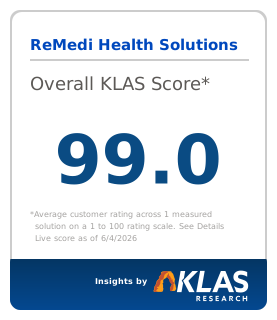
ReMedi maintains a 95.8 KLAS Research rating for Personalization and Optimization services and has earned recognition as #165 on the Inc. 5000 fastest-growing companies list. The company has served as a member of CHIME and the KLAS Arch Collaborative. ReMedi specializes in Epic Systems, Oracle Health, and EHR implementations, with extensive experience in system selection advisory, physician go-live support, personalization, and optimization.

Contacts

Media & Clinical Executive Contact:
Rajeeb Khatua, MD
Chief Operating Officer
info@remedihs.com

Transforming Epic Challenges into Clinical Success

A Physician-Led Approach to Epic Consulting & EHR Excellence

The promise of electronic health records was simple: digitize healthcare to improve patient care, streamline workflows, enhance clinical efficiency, and improve interoperability between systems. Yet today, physicians spend up to two-thirds of their workday clicking through Epic rather than caring for patients. Nurses report feeling buried under documentation demands. And healthcare systems struggle with clinician burnout at unprecedented levels.

These aren’t just statistics. They’re the daily reality for thousands of clinicians navigating Epic implementations and optimizations across the country. At ReMedi Health Solutions, our physician-led Epic consulting team has witnessed these challenges firsthand, having supported over 45 healthcare systems through major Epic transformations and large-scale implementations and optimizations. We understand these pain points because we’ve lived them, both as practicing clinicians and as informaticists leading these complex healthcare IT consulting projects.

The Five Critical Challenges and How to Overcome Them

1. Breaking Free from Redundant, Unoptimized Workflows

Epic’s power lies in its configurability, yet many organizations simply digitize paper processes without reimagining workflows for the digital environment. The result? What we call “death by a thousand clicks,” where ordering a simple medication or reviewing an allergy requires navigating multiple screens.

Recent studies reveal that Epic’s standard builds often fail to align with specialty-specific needs¹. What works for internal medicine may create friction for oncology or emergency departments. This one-size-fits-all approach forces clinicians into workflows that feel redundant and disconnected from actual patient care.

The ReMedi Approach: Our physician informaticists don’t just teach Epic functionality. They reimagine workflows from a clinical perspective. Through our specialty-specific Epic optimization services, studies show that customizing workflows for each department’s unique needs can reduce documentation time by up to 36%². Our team of physicians, nurses, and pharmacists understands that efficient workflows must reflect how care is actually delivered, not how a system thinks it should be delivered.

2. Epic Software Training: Transforming Training from Burden to Empowerment

Traditional Epic training often fails clinicians. One-time classroom sessions can’t prepare providers for the complexity of real-world clinical scenarios. Nearly 40% of nurses report their Epic training was inadequate, with 42% saying it wasn’t tailored to their specific workflows³.

Without ongoing support, clinicians resort to inefficient workarounds or flood IT departments with help tickets. The knowledge gap between what Epic can do and what users know how to do becomes a chasm that swallows productivity and morale.

The ReMedi Approach: We pioneered the peer-to-peer Epic training model because we believe clinicians learn best from clinicians. Our Epic-certified physicians speak the same clinical language, understand the same pressures, and can translate technical capabilities into practical workflows. In our recent partnership with a leading oncology center, this physician-to-physician support model maintained patient volumes during go-live (an achievement rarely seen in major Epic system implementations).

Our Epic software training methodology has consistently achieved a 99% increase in clinician confidence post-training and a significant decrease in educational-related tickets during go-live support.

3. Unlocking the Power of Epic Personalization

Research demonstrates significant underutilization of Epic’s personalization features, with many clinicians missing out on SmartPhrases, customized order sets, and preference lists that could save hours weekly². They’re using Epic with default settings, leaving powerful efficiency tools untapped.

The most satisfied Epic users heavily leverage personalization features. At UC Davis Health, physicians who completed personalization training reduced after-hours charting by 25 hours per month and improved their Epic efficiency scores by 24%⁴. Yet most organizations lack structured personalization programs, leaving clinicians to figure it out alone (if they have time).

The ReMedi Approach: Our Epic Personalization and User Settings Labs (USL) aren’t just training sessions. They’re transformation experiences. Through one-on-one sessions with our physician consultants, providers learn to create custom note templates with SmartPhrases, build personalized order sets, optimize preference lists, and configure SmartSets for their specific practice patterns.

At UT Health, we provided Epic personalization support to over 2,000 physicians across 80+ specialties. Our clinically-driven approach ensures that Epic works the way physicians work, not the other way around. We’ve seen providers who thought Epic was their enemy become advocates after discovering how personalization can streamline their daily practice.

4. Creating Communication Channels That Actually Work

Sixty-five percent of nurses feel they have no voice in EHR changes at their organization⁵. This disconnect between end-users and decision-makers creates a vicious cycle: clinicians encounter daily frustrations, have no effective way to communicate them, and eventually disengage from the system entirely.

When feedback disappears into a void, minor issues fester into major problems. Organizations miss opportunities to improve workflows, address safety concerns, and boost satisfaction. The technology meant to connect healthcare instead creates silos between those who use it and those who manage it.

The ReMedi Approach: Our clinical help desk and Epic support services revolutionize post-implementation support. By creating dedicated support channels for providers, nursing, and front desk staff (all answered with clinical peer oversight), we ensure that every concern is understood and addressed by someone who speaks the same language.

In one large East Coast health system, our clinical help desk handled over 6,000 calls monthly with a 70% first-call resolution rate and just 23-second average response time. But more importantly, we created a feedback loop where clinical insights directly inform system improvements. Our Power BI dashboards provide real-time visibility into user challenges, enabling rapid response to emerging issues.

5. Conquering the Administrative Avalanche

The numbers are staggering: physicians handle 43 prior authorization requests weekly, spending 12 hours on these administrative tasks alone⁶. Add lengthy documentation requirements, endless InBasket messages, and medication refills, and it’s no wonder 75% of healthcare professionals feel documentation demands impede patient care⁷.

EHR-related administrative burden directly correlates with higher burnout rates, medical errors, and clinician turnover. The technology meant to support clinical excellence has become its greatest obstacle.

The ReMedi Approach: We attack administrative burden from multiple angles. Our Epic optimization and consulting services identify and eliminate unnecessary documentation requirements, streamline InBasket workflows, and implement protocol-driven systems that appropriately distribute tasks across care teams.

During implementations, our hybrid Epic go-live support model (combining on-site physician informaticists with virtual support teams) ensures clinicians never feel abandoned with administrative challenges. We’ve deployed innovative solutions like AI-enhanced support tools that resolved over 1,100 queries on-demand during a large health system go-live, preventing small issues from becoming documentation disasters.

Healthcare IT Consulting Built on Clinical Understanding

What sets ReMedi’s Epic consulting services apart isn’t just our offerings. It’s our perspective. Our leadership team has walked in your clinicians’ shoes. We’ve felt the frustration of newly configured systems, the exhaustion of documentation and click burden, and the satisfaction of finally getting Epic to work as desired.

This clinical DNA infuses everything we do, from our initial workflow assessments to our post-live optimization services. We don’t just implement Epic; we transform it into a tool that enhances rather than hinders clinical practice. Our comprehensive Epic service lines (advisory, training, personalization, go-live support, optimization, and clinical help desk) each address specific pain points while working together to create sustained success.

As proud members of the KLAS Arch Collaborative, we leverage data-driven insights to continuously improve our Epic consulting methodologies. Our 95.8 overall KLAS score reflects not just technical competence, but our unwavering commitment to clinician satisfaction and patient care.

The Path Forward: Expert Epic Consulting for Your Organization

Epic’s challenges are real, but they’re not insurmountable. With the right healthcare IT consulting approach (one that prioritizes clinical workflows, peer-to-peer support, and continuous optimization), Epic can fulfill its promise of enhanced patient care and clinical efficiency.

At ReMedi, we believe every click should have clinical value. Every workflow should reflect how care is actually delivered. And every clinician should feel empowered, not burdened, by their EHR. When we get Epic right, we don’t just improve metrics. We restore joy to the practice of medicine.

Ready to transform your Epic challenges into clinical success? Let’s start a conversation about how our physician-led Epic consulting and training services can make the difference for your organization.

For more information about ReMedi Health Solutions and our comprehensive Epic consulting services, contact us at info@remedihs.com or explore www.remedihs.com.

References:

  1. Tang et al. BMJ Health & Care Informatics. 2025. Epic Implementation User Experiences.
  2. Chen JG, et al. JMIR Formative Res. 2025. Outcomes of an Advanced Epic Personalization Course.
  3. Healthcare Dive. 2024. Nurse EHR Satisfaction & Burnout Report (KLAS).
  4. UC Davis Health. 2019. Physician Efficiency Program Results.
  5. Healthcare Dive. 2024. Clinical Documentation Burden Survey (AMIA).
  6. AMA. 2024. Prior Authorization Physician Survey.
  7. Downing NL, et al. NAM Perspectives. 2022. EHR Optimization and Clinician Well-Being.

Transforming EHR Adoption with Peer-Led Personalization

Discover How a Leading Northeast Health System Achieved 97.8% Physician Satisfaction with Epic Personalization

Transforming Provider Readiness from 61.8% to 95% Confidence Through Physician-Led Training

When a major Northeast health system with 2,500+ physicians across 20+ facilities faced Epic implementation, traditional training methods weren’t enough. With physician readiness averaging just 61.8% and 33% rating themselves as unprepared, they needed a different approach.

ReMedi Health Solutions delivered a breakthrough physician-to-physician personalization model that transformed their Epic adoption:

Exceptional Results:

  • 97.8% satisfaction rating for ReMedi physician coaches
  • 96.3% satisfaction with personalization sessions overall
  • 95.9% of physicians recommended sessions to colleagues
  • 30.4% increase in Epic readiness after a single session
  • 5,000+ personalization sessions delivered across 100+ specialties

The Secret? Clinical Expertise at Scale: Our hybrid virtual and in-person model enabled 350+ sessions per day during peak periods, while maintaining the clinical depth that drives real adoption. Real-time analytics tracked every metric—from session completion to physician confidence levels.

“I had the pleasure of receiving my Epic Personalization training from a ReMedi Physician who was both patient and incredibly informative. They clearly explained the purpose of each icon, guided me through the process, and even anticipated my needs when I wasn’t sure what to ask. His ability to tailor the training to my role within the institution was invaluable. He went above and beyond to ensure I felt confident and equipped, and his support made the entire experience seamless and productive. A true professional and a great guide!” — Physician, Epic End-User

Download the full case study to discover:

  • The specific 3-pillar approach that achieved 95%+ satisfaction ratings
  • How real-time analytics dashboards tracked 2,596 specialists across all specialties
  • Why 2,270+ custom templates and 2,230+ preference lists were built in just 13 weeks
  • The exact methodology that maintained clinic volumes during go-live

Ready to see how physician-led personalization can transform your Epic implementation?


    Achieving Epic Efficiency: How NMHS Transformed Physician Experience with Personalized EHR Training

    How North Mississippi Health Services Enhanced Clinician Efficiency and Confidence with Epic EHR Personalization

    North Mississippi Health Services (NMHS), a leading healthcare provider across Mississippi and Alabama, faced significant challenges during a large-scale Epic EHR implementation. Clinicians struggled with lengthy documentation processes and inefficient workflows, impacting patient care and physician satisfaction.

    By implementing ReMedi’s peer-to-peer virtual training model, NMHS achieved remarkable results through specialty-specific personalization. The clinically-driven, scalable approach empowered clinicians with tailored SmartPhrases, NoteWriter Macros, and optimized SmartSets, significantly improving workflow and EHR usability.

    Download the full case study to explore detailed outcomes, implementation strategies, and learn how NMHS achieved Epic’s Good Install Credit with ReMedi’s proven methods.

    Key Outcomes from NMHS’s Epic Personalization:

    • 97.9% increase in Epic confidence after peer-to-peer training
    • 99.4% rating for ReMedi Physician Coaches
    • Full engagement of Epic Personalization using a fully virtual on-demand model, leading to achievement of Epic’s Good Install Credit
    • System-wide adoption of customized workflows and Epic smart tools optimized by specialty

    Discover How Personalized Epic Training Drives Success
    Complete the form below to instantly access the full NMHS case study and learn how your organization can achieve similar results.

    Download the Case Study Now

      ReMedi KLAS Press Release Blog Graphic

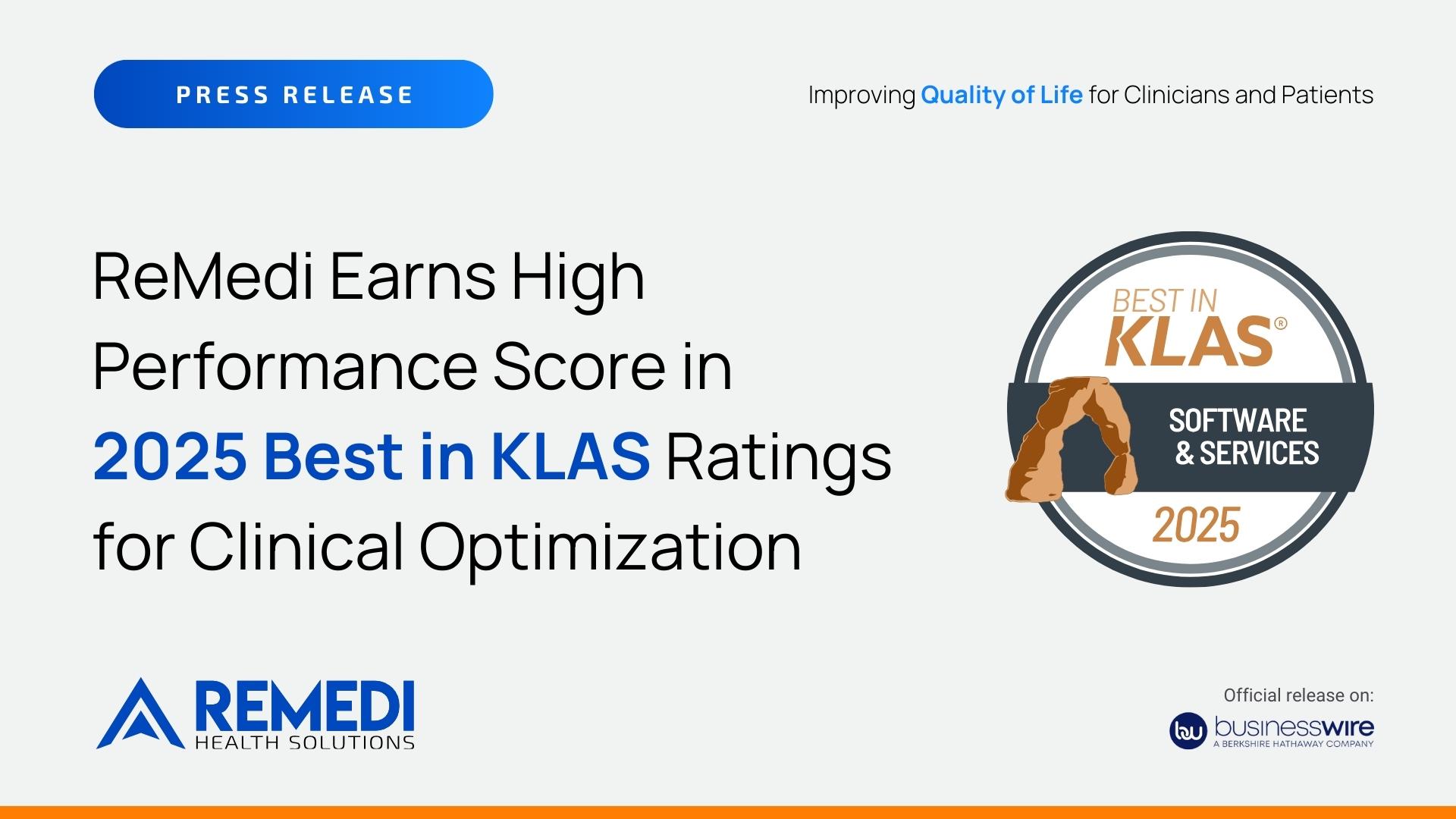
      ReMedi Health Solutions Earns High Performance Score in 2025 Best in KLAS Ratings for Clinical Optimization

      Exceptional provider ratings highlight ReMedi’s physician-led approach to improving clinical workflows and EHR efficiency with Personalization and Peer-to-Peer Support.

      HOUSTON–(BUSINESS WIRE)–ReMedi Health Solutions, a physician-led healthcare IT consulting firm, received a high performance score of 95.8 for Clinical Optimization services as a newly rated firm in the 2025 Best in KLAS: Software & Services report—significantly exceeding the segment average of 90.4. Based on direct feedback from provider organizations, this rating reflects the firm’s commitment to helping clinicians work more efficiently and effectively within their EHR environments.

      The Best in KLAS rankings serve as an industry benchmark for healthcare technology and services performance, compiling direct input from provider organizations on vendors’ ability to drive outcomes, deliver value, and support long-term success.

      Healthcare organizations consistently rated ReMedi highly across categories such as Loyalty, Product, Relationship, and Value. In interviews, customers highlighted the firm’s clinical credibility, strong partnership approach, and ability to deliver personalized, results-driven support. Providers emphasized that ReMedi’s team, many of whom are physicians, brought both technical skill and real-world understanding, helping health systems achieve meaningful outcomes without adding unnecessary complexity or cost.

      ReMedi’s ratings in these KLAS categories include:

      • Loyalty (A+)
      • Services (A)
      • Relationship (A)
      • Value (A)

      “We are grateful for the trust our clients place in us,” said Rajeeb Khatua, MD, Chief Operating Officer of ReMedi Health Solutions. “These ratings reflect our belief that when clinicians lead, better outcomes follow. Our team doesn’t just implement—we advise, partner, and deliver meaningful change.”

      Built by Clinicians, Backed by Outcomes

      ReMedi brings together physicians, nurses, informaticists, and subject matter experts to help hospitals and health systems personalize and optimize their EHR platforms. ReMedi’s model focuses on provider happiness and long-term transformation with services that include:

      Healthcare leaders consistently cite ReMedi’s ability to reduce EHR-related burden, align IT initiatives with clinical priorities, and deliver measurable impact.

      What Customers Said in KLAS Interviews

      “ReMedi Health Solutions’ consultants . . . understand surgical workflows, medicine workflows, and clinical workflows. That is a huge deal to a lot of our providers.” —CMIO, January 2025

      “The work done by ReMedi Health Solutions was highly praised by our physicians, and it was one of the best decisions we made. Also, the firm’s leadership was very engaged and active in ensuring success.” —CMIO, November 2024

      “One of the big reasons we chose ReMedi Health Solutions over other firms was their quality. I knew some of their staff members… They are very experienced in this field. They do personalization very well.” —CMIO, January 2025

      About ReMedi Health Solutions

      ReMedi Health Solutions is a physician-led healthcare IT consulting firm that helps hospitals and health systems optimize their EHR platforms through personalized training, workflow design, and physician informatics-led strategy. With a focus on clinical adoption and efficiency, ReMedi empowers providers to get more from their technology—and provide better care to their patients.

      This article was originally distributed via BusinessWire.

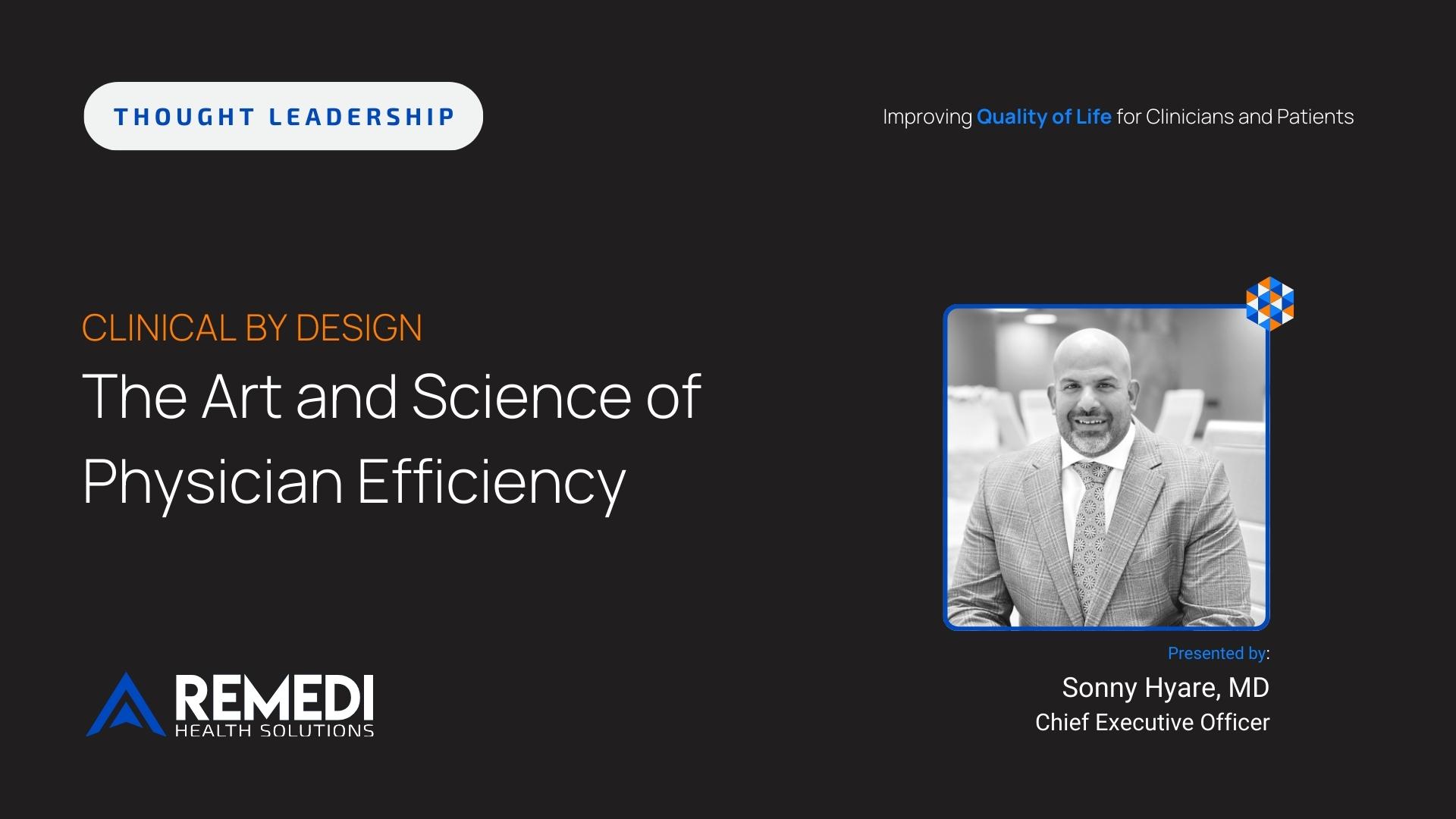
      Clinical by Design: The Art and Science of Physician Efficiency

      By Sonny Hyare, MD

      Software is eating the world, and healthcare is no exception. From chatbots to virtual scribes, the promises of AI and automation continue to reshape medicine. Yet amid this technological revolution, one fundamental challenge persists: enabling physicians to work efficiently with their EHR systems.

      Our previous article, “From EHR to ROI: Connecting Dots in Physician Efficiency,” explored the impact of complex navigation, redundant interfaces, and inadequate training contributing to physician burnout and decreased productivity. As the pendulum swings from antiquated to new methods, ReMedi Health Solutions maintains focus on what matters most: patients, clinicians, and healthier outcomes.

      While the industry experiments with futuristic solutions, we take a fundamentally different approach with our Physician Personalization & Efficiency Sessions—one where clinical expertise drives technological transformation. Through personalized, peer-to-peer engagement and advanced analytics, we deliver sustainable improvements at scale. This article, the second in our three-part series, unpacks the inner workings of our clinical by design methodology and its power to transform EHR utilization across health systems.

      The Physician Efficiency Challenge

      The consequences of inefficiency are significant: physician burnout, reduced patient face time, and compromised care quality. ReMedi’s approach addresses these challenges through a unique combination of clinical leadership, targeted optimization, and physician-led training that consistently delivers measurable improvements in efficiency and satisfaction.

      The ReMedi Difference: Clinical Leadership at the Core

      What sets ReMedi apart is our unwavering commitment to clinical excellence through physician-led innovation. Our programs are designed and led by physicians who have walked in our clients’ shoes, understanding both the pressures of patient care, constantly changing reimbursement models, and the highs and lows of healthcare technology. Our physician informaticists bring a unique perspective towards EHR anywhere in its lifecycle by:

      • Identifying efficiency opportunities that others miss
      • Designing solutions that align with real clinical workflows
      • Delivering training that resonates with clinicians
      • Driving adoption through peer-to-peer engagement
      • Optimizing documentation to maximize reimbursement potential and ensure compliance across all care models

      Delivering Efficiency at Scale

      ReMedi’s approach goes beyond traditional EHR training by combining peer-to-peer expertise with a scalable tech stack. Our Physician Efficiency Programs create sustainable improvements through a carefully crafted methodology that scales across healthcare organizations while maintaining personalization for each physician.

      Personalization with Purpose

      What makes our approach unique is our ability to tailor EHR systems to each physician’s specific needs while maintaining organizational standards. By focusing on individual workflow patterns and specialty requirements, we ensure that every output directly enhances clinical efficiency. Our physician informaticists work one-on-one with clinicians to customize their digital workspace, streamlining documentation, orders, charge capture and clinical review processes.

      Data-Driven Optimization

      Our approach to efficiency uses analytics to identify opportunities for improvement while measuring the impact of our interventions. This technology-enabled approach allows us to:

      • Target high-impact optimization opportunities
      • Measure doctor’s real-world efficiency gains
      • Ensure sustained adoption of improvements
      • Scale solutions across departments and specialties

      Measurable Impact Across Healthcare Organizations

      ReMedi’s “clinical by design” approach consistently transforms how physicians interact with technology, delivering results that matter to both clinicians and healthcare leaders:

      Physician Time Recovery

      Our programs consistently save physicians 60-70 minutes per day on documentation, dramatically reducing administrative burden through optimized workflows. While ambient AI technology promises to revolutionize clinical documentation, it addresses just one facet of the physician’s digital experience. Direct EHR interaction remains essential—from verifying AI-generated notes to managing complex clinical scenarios and maintaining compliance requirements. 

      Furthermore, personalized EHR optimization creates a synergistic effect: as ambient AI handles routine documentation, customized workflows enable physicians to navigate remaining tasks with unprecedented efficiency. This comprehensive approach translates directly to increased patient care, improved work-life balance, and reduced burnout risk.

      Enhanced Clinical Efficiency

      Over 85% of physicians report significantly faster order entry after implementing our solutions, while streamlined clinical review processes across all specialties ensure faster, more accurate decision-making. By reducing time spent on non-clinical tasks, we enable physicians to focus on what matters most: patient care.

      Increased Physician Confidence

      Nearly 100% of physicians report increased confidence in their EHR use, with over 50% improvement in self-reported proficiency after each session. This enhanced mastery of digital tools leads to sustainable improvements in workflow efficiency and better clinical outcomes.

      Exceptional Satisfaction

      Our physician-led approach consistently earns exceptional satisfaction ratings above 4.9/5, with nearly 100% of participants recommending our programs to colleagues. This outstanding satisfaction reflects our deep understanding of clinical needs and our ability to deliver meaningful improvements that resonate with practicing physicians.

      Anonymous physician comments from ReMedi Personalization Surveys:

      “I have already used [EHR] for over ten years, so it was useful to learn new “tricks”.”

      “Thank you. My experience with my 1:1 Trainer was very informative and eased my anxiety about the transition. She helped me set up a streamlined view and process to use [EHR]. Please continue to offer these 1:1 sessions. They are invaluable.”

      “The focused training was much more beneficial than the previous sessions. I definitely feel more confident with the system after the session today.”

      Beyond Traditional EHR Training

      Standard vendor training treats the EHR like any other software platform, focusing on individual role competencies. But healthcare is different. Patient care flows across departments, specialties, and roles—requiring a more sophisticated approach to EHR education. Our programs go beyond basic feature training to address the full complexity of clinical workflows, ensuring that efficiency improvements benefit the entire patient journey rather than isolated tasks.

      The Path Forward: Key Considerations for Health IT Leaders

      The transformation of healthcare technology goes beyond efficiency metrics—it’s about creating an environment where excellence in patient care can lead the way. Consider these critical factors for achieving true physician efficiency:

      • Clinical leadership must drive technology optimization, not the other way around.
      • One-size-fits-all EHR training consistently fails to deliver sustainable results.
      • Physician time savings must be measured in hours per week, not minutes per task. 
      • True EHR optimization doesn’t just save time—it improves how physicians practice.
      • Real transformation doesn’t require a shiny new tool. It happens at the intersection of workflow, specialty expertise, and technical capability.
      • The most successful EHR optimization programs prioritize physician wellness alongside operational metrics and payor reimbursement models.

      Ready to explore how these principles can transform your organization? Connect with ReMedi to begin the conversation.

      About the Author:

      Sonny Hyare, MD, brings 15+ years of clinical technology expertise to his role as Chief Executive Officer of ReMedi Health Solutions. As a former physician executive with Advisory Board Company, he led EHR transformations at some of the nation’s largest health systems. His proven approach to physician efficiency has shaped how leading healthcare organizations implement and optimize their EHR systems.

      Connect with Sonny on LinkedIn to discuss your EHR implementation and optimization strategy.